 |
Literature as Social Solidarity FactorTranslator Samvel Mkrtchyan and writer, translator Hakob Movses analyze the topic of literature as a factor of social solidarity, human self-cognition and self-cleansing. Is our culture today capable of creating and sustaining statehood? The conversation is hosted by Anna Sargsyan. |
 |
Totalitarian System and the Man: EducationWhat does education serve for in the totalitarian system, how can we cure the education system in post-totalitarian period to make it healthy? The topic is discussed by Lusine Kharatyan, Country Director of German DVV International and sociologist Satenik Mkrtchyan. The conversation is hosted by Anna Sargsyan. |
 |
Totalitarian System and the Man: ArchitectureIt is said that small is beautiful, while big – noble. Is it possible to consider this as the motto of architecture of totalitarian system? What were the specifics of area organization in former Soviet Union and fascist Italy? The topic is discussed by art critic, curator Ruben Arevshatyan and architect, city engineer Sarhat Petrosyan. The conversation is hosted by Anna Sargsyan. |
 |
Totalitarian System and Man: DissidenceWhat is dissidence, social status, public label, or expression of inherent right to think and express opinion? What was the specifics of the dissidence in Soviet era? The topic is discussed by culture expert Nikol Margaryan and human rights activistVardan Harutyunyan. |
 |
Totalitarian System and ManWhat is the totalitarian system, how is it defined? Why are totalitarian systems considered to be inefficient? The topic is discussed by Doctor of History Sciences Harutyun Marutyan and Candidate of History Sciences Gayane Shagoyan. The conversation is hosted by Anna Sargsyan. |
 |
Sovereignty, part 2“Nations without sovereignty, living in another state have a status of a hostage”. Karen Aghekyan, editor-in-chief of e-magazine “Context” and journalist Armen Hovhannisyan continue discussing the topic of sovereignty. The conversation is hosted by Anna Sargsyan. |
 |
Sovereignty, part 1Sovereignty is the key denotation of the state. At the same time, restriction of sovereignty is one of the patterns of the modern globalization. Is the striving for independence and fight for sovereignty in our country conditioned by only this theoretical paradox? The topic is discussed by Karen Aghekyan, editor-in-chief ofe-magazine“Context” and journalist Armen Hovhannosyan. The conversation is hosted by Anna Sargsyan. |
 |
Studies of DiasporaThe restoration of relations and cooperation with the Diaspora was one of the most wonderful opportunities enabled by the independence. How does science, especially Diaspora studies help support this opportunity? The topic is discussed by Ara Sanjian, University of Michigan - Dearborn, History, Social Sciences and Armenian Research Center, Faculty Member and journalist Tatul Hakobyan. The conversation is hosted by Anna Sargsyan. |
 |
Meaningfulness of independence, part 2How should the political thought be formed, what is the understanding of the citizen on the value of independent state and outcome? When is the independence an opportunity, and when is it a burden? The topic is analysed by Manvel Sargsyan, the Director of the Armenian Center for National and International Studies and Saro Saroyan, political analyst. The conversation is hosted by Anna Sargsyan. |
 |
Meaningfulness of independenceFor ages, the strive for independence characterized us a nation. After we achieved our statehood, we still strive for independence. What is this, a national living standard, or a syndrome of not attaching enough importance to independence? The topic is analysed by cultural anthropologist Aghasi Tadevosyan and historian Hayk Konjoryan. |
 |
Independence and Contemporary ArtFrom what perspective does the contemporary art view independence, how is art involved in public life? What platform does the contemporary art express itself in – museum, or in the street? The topic is discussed by artists Sahak Poghosyan and Artur Petrosyan. The conversation is hosted by Anna Sargsyan. |
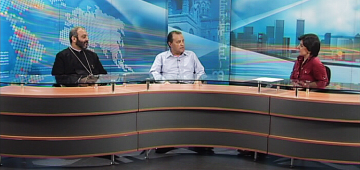 |
Globalization and Smaller CulturesHow and why preserve the smaller cultures in this world of globalization? The topic is discussed by Bishop BagratGalstanyan and composerArmenMartirosyan. |